Olivia Otto · 8 September 2026
Environmental Obstacles Influencing Subway Expansion Efforts in Western Poland
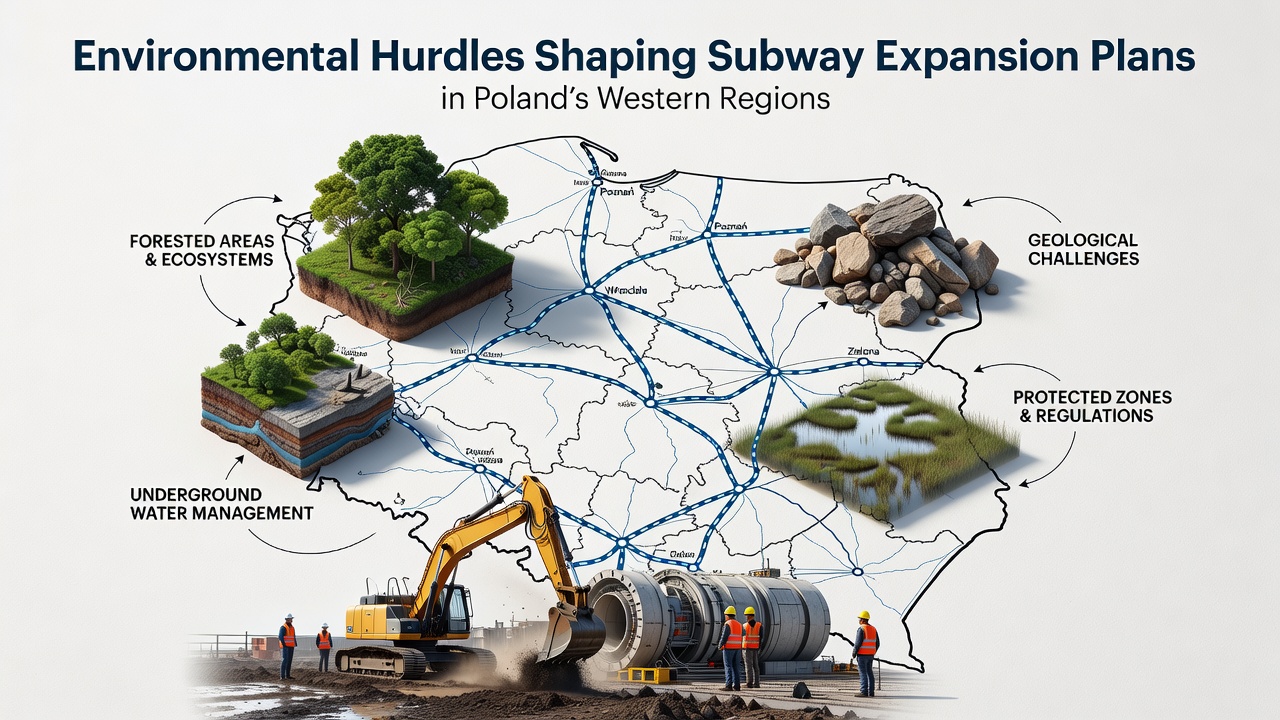
Western Poland's subway expansion initiatives encounter significant environmental constraints that reshape project timelines and route selections across multiple cities. Researchers have documented how protected habitats, water management systems, and biodiversity regulations intersect with infrastructure goals in regions like Greater Poland and Lower Silesia. These factors create layered compliance requirements that planners must navigate before construction advances.
Protected Habitats and Route Adjustments
Many proposed corridors pass near Natura 2000 sites where strict EU directives limit ground disturbance and vibration impacts. Data from regional environmental assessments show that several alignments originally planned for 2024 now require rerouting to avoid sensitive zones containing rare amphibian populations and migratory bird pathways. Observers note that such modifications extend feasibility studies by 12 to 18 months while engineers evaluate alternative paths that maintain connectivity between urban centers and suburban nodes.
Soil stability assessments reveal additional complications in areas with high groundwater tables. Construction teams have identified zones where tunneling could alter local hydrology, prompting the integration of advanced monitoring systems to track changes during and after excavation. These measures align with broader European environmental standards that prioritize minimal disruption to existing water flows.
Regulatory Timelines and September 2026 Milestones
Polish authorities coordinate with EU oversight bodies to ensure expansion plans satisfy updated biodiversity targets scheduled for review in September 2026. This deadline influences permitting processes because any unresolved habitat concerns could delay funding approvals under current multiannual financial frameworks. Project documentation indicates that preliminary environmental impact statements for lines serving Poznań and Wrocław suburbs now incorporate expanded public consultation periods to address community concerns about green space preservation.
Water Resource Considerations
Western Poland's river basins present specific challenges for underground infrastructure. Studies conducted by hydrology experts demonstrate that certain tunnel segments risk intersecting flood retention areas, leading to redesigned drainage protocols and reinforced barriers. These adaptations increase material costs yet help maintain compliance with national water management strategies that emphasize resilience against seasonal flooding events.
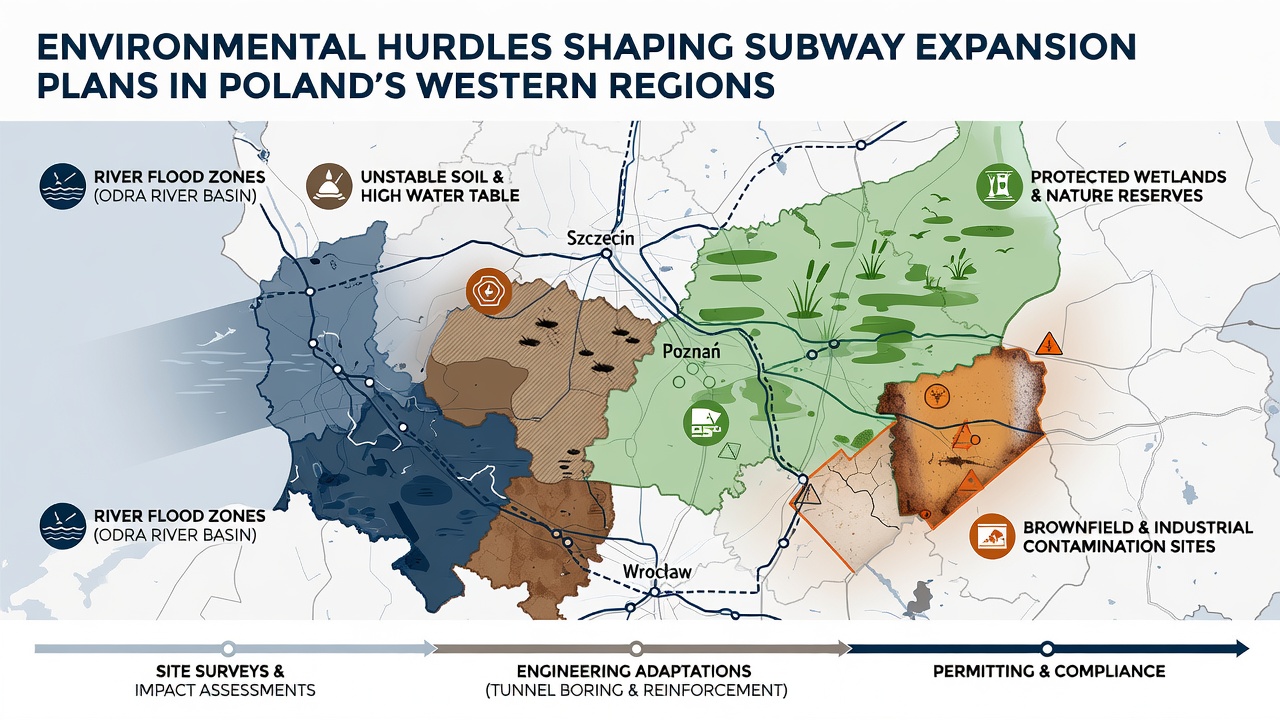
Monitoring stations installed at test sites collect continuous data on groundwater levels and soil composition. Results from these installations feed into dynamic modeling tools that predict long-term effects of tunneling operations. When simulations flag potential issues, teams adjust boring machine speeds and lining materials accordingly to reduce pressure on surrounding ecosystems.
Biodiversity Mitigation Strategies
Wildlife corridors receive particular attention during planning phases. Ecologists have mapped migration routes for species such as European otters and various bat populations that frequent the western lowlands. Mitigation includes elevated track sections in select locations and installation of underpasses designed specifically for small mammal movement. These features integrate into overall project budgets from the outset rather than appearing as afterthoughts.
Vegetation surveys conducted along potential rights-of-way identify stands of protected plant species. When removal proves unavoidable, transplantation programs relocate specimens to designated conservation plots monitored by local botanical institutions. Records indicate successful relocation rates exceeding 70 percent in comparable prior projects within the same regions.
Community and Stakeholder Engagement
Local governments facilitate ongoing dialogues between residents, environmental groups, and engineering firms. Public forums held in 2025 highlighted concerns about construction noise and dust near residential areas adjacent to proposed stations. Responses include revised work schedules that limit heavy activity during breeding seasons for local fauna and deployment of dust suppression equipment at active sites.
Academic partnerships contribute specialized knowledge on regional ecology. Universities in Poznań and Wrocław supply field data that refines environmental management plans submitted for regulatory approval. These collaborations strengthen the scientific foundation of mitigation measures while training future professionals in integrated infrastructure planning.
Conclusion
Environmental hurdles continue to guide subway expansion strategies throughout western Poland by demanding careful integration of habitat protection, water management, and regulatory compliance. As September 2026 approaches, project teams focus on delivering updated documentation that satisfies both national priorities and EU sustainability benchmarks. The resulting infrastructure promises improved urban connectivity while respecting the ecological characteristics that define these landscapes.